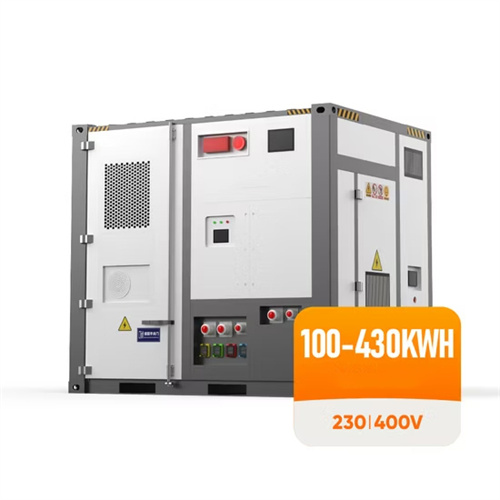
Faroe Islands save electrical energy at home
Energy in the Faroe Islands is produced primarily from imported fossil fuels, with further contributions from hydro and wind power. Oil products are the main energy source, mainly consumed by fishing vessels and sea transport. Electricity is produced by , and , mainly by , which is owned by all the municipalities of the Faroe Islands. The are not connected by power lines with continental Europe, and thus the archipelago can. [pdf]
FAQS about Faroe Islands save electrical energy at home
How much electricity is renewable in the Faroe Islands?
In the Faroe Islands, more than 80% of the power for the main grid was renewable on 50 days in 2022. The municipality-owned company SEV is the main electricity supplier, providing approximately 90% of the total production, with private producers contributing the remaining percentage.
How is energy produced in the Faroe Islands?
In the Faroe Islands, energy is produced primarily from hydro and wind power, with oil products being the main energy source. Mostly consumed by fishing vessels and sea transport.
Should the Faroe Islands be self-sufficient?
Isolated in the North Atlantic Ocean, the Faroe Islands need to be self sufficient in terms of electricity generation as the Faroese electrical grid is not interconnected to neighbouring countries. SEV operates six hydro power plants, three thermal power plants, three wind farms and one solar power plant.
Why is Sev the main power supplier in the Faroe Islands?
SEV is the main power supplier in the Faroe Islands. We operate on 17 of the 18 islands that constitute the Faroe Islands. Isolated in the North Atlantic Ocean, the Faroe Islands need to be self sufficient in terms of electricity generation as the Faroese electrical grid is not interconnected to neighbouring countries.
Can the Faroe Islands import or export electricity?
The Faroe Islands cannot import or export electricity since they are not connected by power lines with continental Europe. Per capita annual consumption of primary energy in the Faroe Islands was 67 MWh in 2011, almost 60% above the comparable consumption in continental Denmark.
Are the Faroe Islands a sustainable country?
Did you know that the Faroe Islands is one of the world’s leading nations in producing sustainable electricity with over 50% of the nation’s electricity deriving from renewable energy sources? There is no shortage of renewable power in the Faroe Islands, due to the ocean currents and tides of the Northeast Atlantic and an abundance of strong wind.

Rehart power Faroe Islands
Energy in the Faroe Islands is produced primarily from imported fossil fuels, with further contributions from hydro and wind power. Oil products are the main energy source, mainly consumed by fishing vessels and sea transport. Electricity is produced by , and , mainly by , which is owned by all the municipalities of the Faroe Islands. The are not connected by power lines with continental Europe, and thus the archipelago can. [pdf]
FAQS about Rehart power Faroe Islands
Who is rehart power?
REHART Power is a business division of REHART GmbH, a company with a solid ownership structure, which for the entire thirtyfive years of its existence has enjoyed continuous, stable growth and is part of the REHARTGroup. Our goal is to use our hydropower screws ecologically to meet the latest criteria and to achieve optimum energy management.
How is energy produced in the Faroe Islands?
In the Faroe Islands, energy is produced primarily from hydro and wind power, with oil products being the main energy source. Mostly consumed by fishing vessels and sea transport.
Where does electricity come from in the Faroe Islands?
Electricity on the Faroe Islands comes from several different renewable energy sources. Hydroelectric power plants are one of them.
How can the Faroe Islands decarbonize electricity production?
Additionally, a central focus area for decarbonizing the electricity production on the Faroe Islands is to store energy through a “pump to storage system”, while pumping water from the mountain to another dam. The storage system is using extra energy from wind turbines in the form of hydroelectric energy.
Should the Faroe Islands be self-sufficient?
Isolated in the North Atlantic Ocean, the Faroe Islands need to be self sufficient in terms of electricity generation as the Faroese electrical grid is not interconnected to neighbouring countries. SEV operates six hydro power plants, three thermal power plants, three wind farms and one solar power plant.
How many hydroelectric plants are on the Faroe Islands?
Five of the plants are connected to the main electrical grid on the Faroe Islands, while the Botnur plant on Suðeroy only serves that one island. The Botnur plant was the first hydroelectric power plant that was built on the Faroes. It is still running and has two turbines, a 1.1 MW and a 2.2 MW.

Energy storage coalition South Georgia and South Sandwich Islands
南乔治亚和南桑威奇群岛(英語:South Georgia and the South Sandwich Islands,缩写为SGSSI)是在南部的。該屬地由一連串既偏遠且荒涼的島嶼組成,包括和。南佐治亞為該屬地的最大島嶼,位於該屬地的西北部,面積約為3592平方公里。 而則位於南佐治亞東南約700公里,311平方公里。此外,雖然該屬地與福克蘭群島. [pdf]
Contact Us
We are deeply committed to excellence in all our endeavors.
Since we maintain control over our products, our customers can be assured of nothing but the best quality at all times.