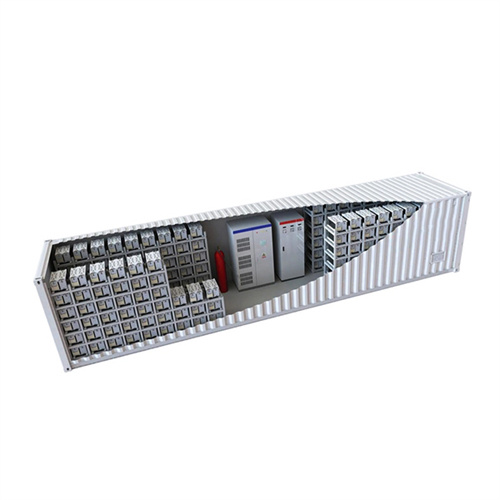
Once human energy storage DR Congo
The Democratic Republic of the Congo has reserves of , , , and a potential power generating capacity of around 100,000 MW. The on the has the potential capacity to generate 40,000 to 45,000 MW of electric power, sufficient to supply the electricity needs of the whole Southern Africa region. Ongoing uncertainties in the political arena, and a resulting lack of interest from investors has meant that the Inga Dam's potential ha. [pdf]
FAQS about Once human energy storage DR Congo
How much electricity does the DR Congo import?
The DR Congo imported 78 million kWh of electricity in 2007. The DR Congo is also an exporter of electric power. In 2003, electric power exports came to 1.3 TWh, with power transmitted to the Republic of Congo and its capital, Brazzaville, as well as to Zambia and South Africa.
How much energy does DR Congo have?
The national hydroelectric potential is estimated at about 100,000 MW, corresponding to 13% of the global potential or 66% of Central Africa's potential. In 2014, the country's energy supply represented only 2% of the hydroelectric potential. Consequently, the DR Congo has been exposed to a chronic energy deficit. 2.1.
Is DR Congo facing a serious energy crisis?
The DR Congo has faced a severe energy crisis despite major energy potential. In 2014, it liberalized its energy sector. The paper examines the Inga 3 dam project, which is confronted with political, geostrategic, and financial challenges.
How will Nuru empower 5 million Congolese people?
By delivering world-class renewable energy and connectivity services, Nuru aims to empower 5 million Congolese people, one connection at a time. Moving ahead, it will be important to strengthen the public sector and the government’s capacity for cross-unit delivery in order to effectively finance renewable energy mini and metro-grids.
How much power does the Democratic Republic of the Congo have?
The Democratic Republic of the Congo has reserves of petroleum, natural gas, coal, and a potential hydroelectric power generating capacity of around 100,000 MW. The Inga Dam on the Congo River has the potential capacity to generate 40,000 to 45,000 MW of electric power, sufficient to supply the electricity needs of the whole Southern Africa region.
How does green technology affect the energy sector in DR Congo?
The energy sector in the DR Congo under the pressure of green technology development In 2016, the energy deficit in the copper-cobalt belt of the ex-Katanga was estimated at 900 MW. In addition to the electricity gap, an insufficient reliable transport system has affected the development of industrial mining projects.

DR Congo wernick power
The Second Congo War, also known as Africa's World War or the Great War of Africa, was a major conflict that began on 2 August 1998 in the (DRC), just over a year after the . The war initially erupted when Congolese president turned against his former allies from and , who had helped him seize. . The Democratic Republic of the Congo has reserves of , , , and a potential power generating capacity of around 100,000 MW. The on the has the potential capacity to generate 40,000 to 45,000 MW of electric power, sufficient to supply the electricity needs of the whole Southern Africa region. Ongoing uncertainties in the political arena, and a resulting lack of interest from investors has meant that the Inga Dam's potential ha. [pdf]
FAQS about DR Congo wernick power
How much energy does DR Congo have?
The national hydroelectric potential is estimated at about 100,000 MW, corresponding to 13% of the global potential or 66% of Central Africa's potential. In 2014, the country's energy supply represented only 2% of the hydroelectric potential. Consequently, the DR Congo has been exposed to a chronic energy deficit. 2.1.
How much electricity does the DR Congo import?
The DR Congo imported 78 million kWh of electricity in 2007. The DR Congo is also an exporter of electric power. In 2003, electric power exports came to 1.3 TWh, with power transmitted to the Republic of Congo and its capital, Brazzaville, as well as to Zambia and South Africa.
Is DR Congo facing a serious energy crisis?
The DR Congo has faced a severe energy crisis despite major energy potential. In 2014, it liberalized its energy sector. The paper examines the Inga 3 dam project, which is confronted with political, geostrategic, and financial challenges.
How much power does the Democratic Republic of the Congo have?
The Democratic Republic of the Congo has reserves of petroleum, natural gas, coal, and a potential hydroelectric power generating capacity of around 100,000 MW. The Inga Dam on the Congo River has the potential capacity to generate 40,000 to 45,000 MW of electric power, sufficient to supply the electricity needs of the whole Southern Africa region.
What is DR Congo's hydroelectric potential?
The electricity sector in crisis in the DR Congo The national hydroelectric potential is estimated at about 100,000 MW, corresponding to 13% of the global potential or 66% of Central Africa's potential. In 2014, the country's energy supply represented only 2% of the hydroelectric potential.
Is the Democratic Republic of the Congo an energy exporter?
One of the Inga dams, a major source of hydroelectricity in the Democratic Republic of the Congo. The Democratic Republic of the Congo was a net energy exporter in 2008. Most energy was consumed domestically in 2008. According to the IEA statistics the energy export was in 2008 small and less than from the Republic of Congo.

Lebanon ric energy
Energy in Lebanon is characterized by a heavy reliance on imported fuels, which has led to significant challenges in ensuring a stable and sufficient supply of . The country’s energy sector has been severely affected by a combination of internal instability, external conflicts, and systemic corruption. The reliance on imported energy, coupled with rising demand and frequent infrastructure failures, has led to an ongoing . This crisis has been further. [pdf]
FAQS about Lebanon ric energy
Who is Ric energy?
Large business groups have trusted RIC Energy to carry out their renewable projects. Transforming the future with sustainable and innovative multi-technology solutions. Renewable energies for a greener world.
How much energy does Lebanon use?
The primary energy use in 2009 in Lebanon was 77 TWh, 18 TWh per million persons. In 2019, the total solar PV capacity was 78MW. Mtoe = 11.63 TWh, Prim. energy includes energy losses.
Will Lebanon be able to supply 30% of its electricity in 2030?
The analysis shows that Lebanon has the potential to supply 30% of its electricity consumed in 2030 from renewables, based on the updated targets and most recent electricity reform paper released in 2019.
Who is Electricite du Liban?
Electricite du Liban, the public entity that currently is the country's primary provider, was founded in 1954, under the name Office d'Electricite et des Transports en Commun. Ensued a period during which the state invested massively in infrastructure, notably the first major thermoelectric plant, which started operating in 1956 in Zouk.
Why was there a power blackout in Lebanon in October 2021?
There was a power blackout throughout Lebanon in October 2021 after Lebanon's two largest power stations—the Zahrani and the Deir Ammar power stations—were shut down due to fuel shortages, leaving Lebanon with no centrally generated electricity, and not enough fuel for private electricity generators.
Why did Turkish Karpowership stop supplying electricity in Lebanon?
In May 2021, Turkish Karpowership, which provided Lebanon with 370 megawatts (MW) at a cost of $850 million per year, ceased supplying electricity due to payment arrears of $100 million, and legal threats to its two barges, MV Karadeniz Powership Fatmagül Sultan and MV Karadeniz Powership Orhan Bey.
Contact Us
We are deeply committed to excellence in all our endeavors.
Since we maintain control over our products, our customers can be assured of nothing but the best quality at all times.