Industrial Capacity of Pakistan to Achieve SDG-9 by 2030
Pakistan''s energy predicament—solutions that are integral to unlocking the potential of this young (1947) and vibrant nation. research and upgrade industrial technologies. Pakistan received a global rating of 55.6 on the SDGs, compared to a much higher regional

Renewable energy substitution and energy technology impact in
Almost 87.8% use of fossil fuel in its mixed energy, with only 12.1% coming from electricity, which has taken submerge environmental risk from CO 2 emissions (CO 2 Es). Like many countries, Pakistan has set ambitious goals for a feasible transition towards clean energy sources. In this study, a trans-log production function is adopted to investigate the energy

Analysis of energy consumption and change structure in major
1. Introduction. Energy has become a fundamental parameter used to regulate a country''s economy [].Macroeconomic development relies on the continuous investigation of new energy sources and industrial technology innovation [].The industrial, transport and agriculture sectors are considered among the leading sectors that play an imperative role in the growth of

Delving into Pakistan''s industrial economy and carbon
Pakistan is the most pollution-affected country in South Asia, contributing 0.87% of the global emissions in 2016 [5].According to the Statistical Review of World Energy [6], Pakistan''s CO 2 Es was 198.3 million tons of CO 2 in 2019.Based on oil, coal and gas, the industrial sector is the highest energy-consuming sector, which has consumed energy by

Implementation of Smart Grid Technologies in Pakistan under
The China Pakistan Economic Corridor (CPEC) is a conglomerate of multibillion dollar infrastructural projects with a major focus on energy sector which offers a great opportunity for the country

Bioenergy production in Pakistan: Potential, progress, and prospect
Pakistan''s energy demand is increasing by the day, and it now stands at 84 MTOE. which is the ability to do work. The control of energy brought in the Industrial Revolution by providing the strength and vitality required for sustained activity. and geothermal) (Ellabban et al., 2014). Renewable energy technologies convert the stored

Review of Pakistan''s Science, Innovation and Technology Policy
In Pakistan the manufacturing industry has been reluctant to carry out R&D and readily imports new technologies or hire consultants from other countries to maintain their factories.

Pakistan''s Energy Sector Challenges and the implementable
Most policy and regulatory interventions in Pakistan target the energy supply side, while limited policy attention has been given to energy demand management techniques. This has led to

Energy efficiency and factor productivity in Pakistan: Policy
Energy efficiency shows tremendous potential for enhancing economic growth while also conquering the emissions of greenhouse gases. It is generally acknowledged that Pakistan''s decarbonization has to be escorted by energy efficiency developments. This study analyzes key factors behind the energy consumption variations at the sectorial level, such as

Renewable energy technologies in Pakistan: Prospects and
A survey of sectoral consumption of different energy sources [1] would reveal that, the primary energy supplies as indicated in Fig. 3 are not enough to meet even the present energy demand of Pakistan. Being energy-deficient country, Pakistan has to spend 3 billion US dollars every year to import oil with annual growth-rate of nearly 1% [5].This means Pakistan,

The Best Solar Company in Pakistan | The Hyper Technologies
Our Mission is to make clean energy universally available by building a smart distributed solar and energy storage network, managed via the Internet, around the world. It doesn''t end here. The Hyper Technologies aggressively do every possible things to accomplish the goals by integrate our technical consulting services, operations

Pakistan''s Energy Sector Challenges and the implementable
Current technology outlook of Pakistan is majorly dominated with Imported technologies on both supply side (such as Solar PVs, Turbines, etc.) as well as demand side (technologies deployed within households, Industrial technologies, etc.). While the local solutions do exist, there growth has been hampered due to following:

The Path Forward for Pakistan''s Energy Transition
Unlocking Investment in Pakistan''s Energy Sector. In the past, Pakistan has asserted it would use up to USD $40 billion in international grants in order to accomplish its emission reductions and realize its renewable energy

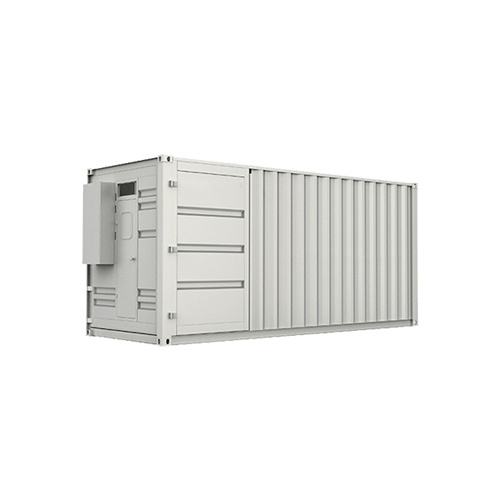
Powering Pakistan''s Future: Industrial Solar and Energy Storage
Enter the dynamic duo of solar energy and energy storage – a combination poised to revolutionize Pakistan''s industrial landscape in 2024 and beyond. The Challenge: Power Shortages and Rising Costs. For decades, Pakistan has grappled with power shortages, leading to disruptive load shedding and hindering industrial productivity.

Energy transition roadmap towards 100% renewable energy and
Hourly resolved model was used to simulate 100% RE scenario in Pakistan from 2015 to 2050, covering demands of the power, desalination and non-energy industrial gas sectors. The optimization is done on the basis of assumed costs and technological status for every 5-years from 2015 to 2050 for all energy technologies involved. 2. Methodology

About Us
Hitech Industrial Solutions (Pvt.) Ltd with its high ambitions is a rapidly growing company in the Railways and Energy sectors of Pakistan. The dedicated and experienced Management Team of HIS has secured aspecial place in history as the pioneer and leader in bringing state of the art technology to Pakistan Railways and WAPDA since decades.HIS business is defined by a

A review and analysis of renewable energy policies and CO2
Pakistan, a developing country with rising energy demand and with a continued crisis in the electricity supply system [[5], [6], [7]] has also ratified PA in 2016 [8].Pakistan faces the classic dilemma: the rising need for energy for the growth of its population and economy and meeting the target of decreasing emissions by 5%–2012 levels by 2030 as specified in

Climate Change And Decarbonisation Of Pakistan''s
Pakistan urgently requires a diverse portfolio of low-carbon technologies, a transition to renewable energy sources, and a viable solution for carbon capture and storage to swiftly reduce GHG emissions and mitigate the

Review of geothermal energy development efforts in Pakistan
It is very fortunate for Pakistan that the industrial hub and port city of Karachi that has the maximum power consumption in the country has very good HDR prospects. Table 6. Applications for Geothermal resources of Pakistan. In comparison with other renewable energy technologies, Geothermal plants take longer time from planning to

Industrial Technologies
The U.S. Department of Energy (DOE) is investing in bold industrial decarbonization technologies at each stage of the innovation pipeline to help manufacturers and businesses use clean energy, increase efficiency, and integrate new, innovative processes and technologies.

Cleaner production of Pakistan''s chemical industry: Perspectives
As Pakistan has a developing economy and its industrial base continues to see growth, the demand for chemicals is gradually increasing. The chemical industry represents the highest contributor to industrial energy demand worldwide, and it accounted for approximately 10% of overall global energy use and 7% of greenhouse gases (GHGs) linked to industry

Sustainable energy changeover in Pakistan: prospects, progress,
The primary commercial energy supplies have decreased from 86 to 84 Mtoe because of a decrease in the supply of oil by 19.8% and LPG by 9.5%, while there is a significant rise in RE by 21.4%, Liquified Natural Gas (LNG) by 18.9%, coal by 18.4%, and 0.3% in nuclear energy as compared to the previous year 2017 (PEYB 2019).Pakistan is situated in a sunny

The Best Solar Company in Pakistan | The Hyper
Our Mission is to make clean energy universally available by building a smart distributed solar and energy storage network, managed via the Internet, around the world. It doesn''t end here. The Hyper Technologies aggressively do every

Smart meters for industrial energy conservation and efficiency
Renewable energy technologies in Pakistan: prospects and challenges. Renewable Sustainable Energy Rev (2008) Industrial consumers have traditionally provided flexibility for power systems through various Demand Response (DR) programs in different regions of the world, but below their real potential.

Opportunities and Challenges for Renewable Energy Utilization in Pakistan
The study established a path for the transformation of the Pakistan energy system by considering the potential of renewable resources, the cost of the energy system, and the primary energy supply.

Economic progress with better technology, energy security, and
Energy consumption in different sectors in Pakistan has risen from the last two decades, which has brought immerse ecological risk from carbon dioxide (CO 2) emission.This research tried to examine potential substitutability of energy (fossil fuel and electricity) and non-energy (labor and capital) input factors by applying the trans-log production method during

Decarbonizing Pakistan’s Cement Sector: The Role of
The cement industry accounts for 7% of total greenhouse gas emissions, with Pakistan''s industry emitting 8.9 million tons annually. Existing decarbonization efforts are insufficient due to technological and policy constraints. CCS presents several challenges, including high costs and energy requirements, as well as advanced monitoring requirements.

Pakistan & Saudi with Acumen Energy for 12 MW Solar Project
InfraZamin Pakistan, Saudi Pak Industrial, and Acumen Energy Limited have signed a landmark deal for an 11.5-year solar financing facility. In a significant step toward advancing renewable energy in Pakistan, InfraZamin Pakistan, in partnership with Saudi Pak Industrial and Agricultural Investment Co Ltd., has signed a groundbreaking deal

Solar Energy Development in Pakistan: Barriers and Policy
Due to massive energy demand by domestic and industrial users, the electricity shortfall has reached 412 MW. Shah, S.W.; Mutlib, A. Identification and removal of barriers for renewable energy technologies in Pakistan. In Proceedings of the 2006 2nd International Conference on Emerging Technologies (ICET''06), Peshawar, Pakistan, 13–14
6 FAQs about [Pakistan industrial technologies and energy]
What is the industrial sector in Pakistan?
Background of Pakistan's industrial sector The industrial sector is generally known to be an industry of enormous energy utilization and a high environmental pollution sector. For instance, in the overall world's energy consumption, the industrial sector consumes a high share of approximately 40% [ 29 ].
How is Pakistan's industrial energy-related CO2 es estimated?
Thus, Pakistan's industrial energy-related CO 2 Es are estimated based on ‘5’ decomposition factors (i.e., carbon intensity, energy structure, energy intensity, employee's value-added, and intensity scale), which have not been discussed in past studies.
Which sector uses the most energy in Pakistan?
Moreover, in Pakistan, the energy consumption of the industrial sector uses a greater share, approximately 37.1%, excluding transport, domestic, commercial, agriculture, and other government [ 7 ]. This sector is an economic engine, providing local and foreign markets output.
Does Pakistan's industrial sector have a higher energy consumption rate than GDP?
However, the rate of change of energy is lower than that of GDP of the industrial sector during 2000, which is consistent with the study of Zhang et al. [ 82 ], who estimated energy consumption in various sectors of China. Pakistan's industrial sector is the major driver of social, economic and environmental degradation.
How much CO2 does the industrial sector produce in Pakistan?
The industrial sector is accountable for above 49% of Pakistan's CO 2 Es. During the past two decades, coal has been the primary energy source in the industrial sector because no other energy source is low-cost and plentiful than coal [ 8 ]. Thus, CO 2 Es from the industries rose from 17.21 Mt to 95.2 Mt during 1990–2019 [ 9 ].
What are the limitations of a productive system in Pakistan?
Moreover, as per the regional scale, Pakistan has certain limitations. As per the latest outcomes, industrial structure, energy intensity and energy structure are crucial factors in varying carbon emissions. For this, a productive system limits the range of contributing technologies that can fulfill production demand and growing projects.