
The development of a solar photovoltaic market in Ghana
Solar energy is poised to become an important source of renewable energy in Ghana. The nation has good solar power potential, with solar irradiation levels ranging between 4.5 to 6.0 kWh/m2 per day.

Transitioning to renewable energy: Challenges and opportunities
For example, solar energy is highly efficient in hot climates, predominantly found in the global south, while wind energy is more suitable for regions with high natural wind speeds. Global cooperation and collective action are crucial for investing in renewable energy infrastructures and driving technology innovation and R&D geared toward

Potentials and Prospects of Renewable Energy for the
Map of Installed Solar Home Systems in Ghana 22 Renewable Energy Applications in Ghana •Solar for off-grid application has potential to increase energy access for: •Limited lighting and
Ghana Energy Outlook – Analysis
Ghana Energy Outlook - Analysis and findings. An article by the International Energy Agency. Achieve 10% renewable energy in the national energy mix and 20% solar energy in agriculture by 2020. 15% (unconditional) to 45% (conditional) reduction in GHG emissions by 2030 compared to the business-as-usual scenario (around 74 Mt CO2 -equivalent

RENEWABLE ENERGY POLICY REVIEW, IDENTIFICATION
the development and deployment of renewable energy technologies in Ghana, and to recommend strategic interventions to facilitate the exchange of expertise and technology, as well as best practices on renewable energy between China and Ghana. The views in this publication are those of the authors and do not necessarily represent those

Status of renewable energy resources for electricity supply in Ghana
Ghana is endowed with wind resource that could be used to produce large amounts of electricity. The Solar and Wind Energy Resource Assessment (SWERA) project implemented in collaboration with the US National Renewable Energy Laboratory (NREL), UNEP and Global Environment Facility identified certain spots along the coastline of Ghana in 2004
Ghana, first in line to drive solar adoption in Africa
Given that solar energy is still in its early stages, there is a unique opportunity to build a more gender-inclusive sector, with women taking up leadership roles. Affordable solar can power Ghana''s diverse industry . An increasing number of Ghanaian businesses are switching to solar energy to power their operations.

The role of renewable energies in sustainable development of Ghana
Ghana is considering renewable energy as an option to contribute to the overall energy supply mix while minimizing adverse effects on the environment [77]. The renewable energy resources for Ghana include hydro, solar, wind, biofuels, tidal/waves, and municipal wastes [87]. Despite the challenges of high-level commitment and unstable energy

Ghana | Sustainable Energy for All
Convene stakeholders from Ghana''s renewable energy manufacturing ecosystem, including government, private sector, industry associations, financiers, and development partners; Showcase findings and insights from Africa REMI engagement in Ghana with stakeholders on expanding domestic manufacturing of solar PV, battery storage and

Challenges of renewable energy development and
Abstract Renewable energy is key to the develop-ment of Ghana''s power sector especially for the replacement of fossil fuels, which have become much a talk globally for contributing to climate change. Unfortunately, Ghana has seen little development and deployment in the renewable energy sector mainly due to the numerous challenges/obstacles

Renewable Energy Deployment in Ghana: The Hype, Hope and
The country has a huge potential for renewable energy that remains underexploited. This study, therefore, seeks to assess the current renewable energy resource situation, examine the trend in Ghana''s energy consumption and undertake a comprehensive review and critical evaluation of Ghana''s renewable energy drive and policies.

Ghana
The Scaling-up Renewable Energy Programme (SREP) is a major multi-donor initiative to leverage financial resources and catalyse private investment in renewable energy solutions. The Government of Ghana (GoG) received approval for its SREP Investment Plan (SREP-IP): document SREP/SC.13/4, SREP Investment Plan for Ghana and Grant Financing

RENEWABLE ENERGY SUB-CODE
Renewable Energy Power Plants in Ghana . i Table of Content PART A: 1 1 Introduction 1 1.1 Scope 1 1.2 Status 1 1.3 Terms and Definitions 2 PART B: 6 2 Technical Connection Conditions 6 2.1 General 6 2.2 Frequency Range of Operation 6

Business Opportunities for Renewable Energy in Ghana
4.2.2 Solar energy 4.2.3 Wind Power 4.2.4 Hydropower: small and large 4.2.5 Tidal and Wave power 5.0 Market Risks and Challenges 5.1 Market Risks mitigation, which promote renewable energy, and for which Ghana is eligible. In 2016 also the Ghana Climate Innovation Centre, co-funded by the Netherlands, will become operational in assisting

Involving Local Communities In Ghana''s Renewable Energy
Ghana''s renewable energy potential is immense, yet fully realizing this potential requires active involvement from local communities. By learning from successful examples of grid modernization and solar power integration in other countries, Ghana can develop a sustainable and inclusive energy strategy.

Towards a sustainable electrification in Ghana: A review of renewable
Ghana enacted the "Renewable Energy Act", Act 832 in 2011 to provide for the development, management, utilization, and adequate supply of renewable energy for generation of heat and power and for related matters [11], [12] s target is to increase the share of sustainable electricity in the national generation mix to 10% by 2020 [13].Ghana is one of the

Prioritizing strategies to eliminate barriers to renewable energy
Fig. A1 is a breakdown of the total installed renewable energy generation capacity in Ghana as of 2019. On-grid occupies the largest share of renewable energy generation capacity (90.3%), followed by off-grid (9.3%) and mini-grid (0.4%). Under on-grid renewable energy generation, utility solar represents the main source of power production.
Renewable energy development in Ghana: Beyond
Saka et al. [27] tackle other aspects of renewable energy in Ghana by reviewing "the regulatory framework, financing incentives and other provisions of the Renewable Energy Act". The study proceeds to also assess "the policy''s strengths, weaknesses, opportunities, and threats based on comparative analysis and lessons drawn from a failed
Renewable energy consumption (% of total final energy consumption)
Renewable energy consumption (% of total final energy consumption) - Ghana from The World Bank: Data. Free and open access to global development data. Data. Electric power transmission and distribution losses (% of output) Access to clean fuels and technologies for cooking, urban (% of urban population)

Transitioning to renewable energy: Challenges and
For example, solar energy is highly efficient in hot climates, predominantly found in the global south, while wind energy is more suitable for regions with high natural wind speeds. Global cooperation and collective

RENEWABLE ENERGY POLICY REVIEW, IDENTIFICATION OF
the development and deployment of renewable energy technologies in Ghana, and to recommend strategic interventions to facilitate the exchange of expertise and technology, as well as best practices on renewable energy between China and Ghana. The views in this publication are those of the authors and do not necessarily represent those

Home | Ministry of Energy
Ghana''s power supply sources are from hydroelectricity, thermal fueled by crude oil, natural gas and diesel, solar and also imports from La Cote D''Ivoire. Ghana also exports power to Togo, Benin and Burkina Faso. Ongoing grid expansions would allow further exports to other neighboring countries in the sub region.

Potentials and Prospects of Renewable Energy for the
Prospects of Renewable Energy in Ghana by Ghanaian delegation August 2016 GNERI, UNIDO-ISEC Lanzhou, Gansu province, China 2. 18/05/2018 2 New Regulations for Utility Scale Solar Power Plants (Oct. 2014) Priority Areas for Off-grid Renewables and

Nuacoo Nunoo: What the return of Mahama, NDC means for the energy
5 天之前· Promoting Solar Energy: Supporting large-scale solar farms and off-grid solar solutions to expand access to electricity in rural areas. Investing in Wind Energy: Exploring Ghana''s potential for

State of art review of Ghana Power System from the perspective
Ghana is actively adopting renewable energy by launching a large solar power plant, aiming to diversify its energy sources and decrease reliance on fossil fuels [94] Improved Access to Electricity Ghana''s power system achieved remarkable progress, increasing electricity access from 41 % in 2000 to 85 % in 2020, improving lives and fostering

Puma Energy Launches Solar Power Systems in Ghana
The solar power generation at 11 of the 14 sites is supported by battery storage. The combined solar and battery power systems in 14 service stations and terminals in Ghana are part of Puma Energy''s Future Energies

How artificial intelligence is helping Ghana plan for a renewable
The first thing the artificial intelligence did is it said, "Oh, you know, renewable energy is good, let''s generate a ton of new energy from solar power and wind power." And so that''s the
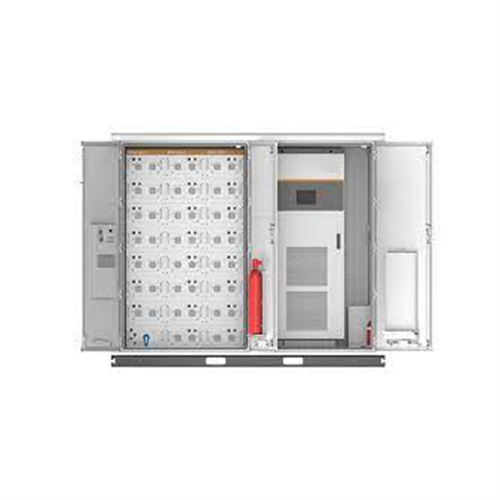
Ghana Renewable Energy
In 2020, Ghana''s Energy Commission announced a moratorium on the issuance of new wholesale electricity supply licenses in the renewable energy sector. The objective at that time had been to improve the financial sustainability of Ghana''s energy industry in the context of excess generation capacity under existing Power Purchasing Agreements

Catalyzing Renewable Energy Manufacturing in Ghana Roundtable
Background. Ghana is a vibrant renewable energy market with a strong momentum for growth. In 2023, the Government of Ghana and Sustainable Energy for All (SEforALL) developed the Ghana Energy Transition and Investment Plan (ETIP) which details a credible pathway for how Ghana can achieve net-zero energy-related carbon emissions by

Puma Energy adds solar, battery storage at stations in Ghana
Multinational oil company Puma Energy said it has installed solar power systems and battery storage units at several of its locations in Ghana. Image by: jola miziniak. Solar panels with a combined total capacity of 422 kWp were installed at 11 retail service stations and three Puma Energy terminals.

RENEWABLE ENERGY (AMENDMENT) ACT, 2020 (ACT 1045)
OF THE PARLIAMENT OF THE REPUBLIC OF GHANA ENTITLED RENEWABLE ENERGY (AMENDMENT) ACT, 2020 AN ACT to amend the Renewable Energy Act, 2011 competitive procurement of power from a renewable energy source; and (b) implementation of the net-metering scheme. (1B) The guidelines issued pursuant to paragraph (a) of subsection (1A)