
International Off-grid Renewable Energy Conference (IOREC)
Convened by the International Renewable Energy Agency (IRENA), IOREC is a leading global platform for sharing experience and best practices on enabling policies, tailored financing, innovation in business models and technology as well as the cross-sectoral and socioeconomic significance of energy access through off-grid renewables.

Off-Grid or Stand-Alone Renewable Energy Systems
Off-Grid or Stand-Alone Renewable Energy Systems; Off-Grid or Stand-Alone Renewable Energy Systems. For many people, powering their homes or small businesses using a small renewable energy system that is not connected to the electricity grid -- called a stand-alone system -- makes economic sense and appeals to their environmental values.

Sungrow partners with Zenith Energy to power Australia''s largest
5 天之前· Sungrow has announced its pivotal role in the Kathleen Valley operation, Australia''s largest off-grid hybrid renewable energy system. Developed in collaboration with Zenith Energy and Liontown

ENERGY PROFILE Armenia
Primary energy trade 2016 2021 Imports (TJ) 93 525 0 Exports (TJ) 4 425 0 Net trade (TJ) - 89 100 0 Imports (% of supply) 72 0 Exports (% of production) 10 0 Energy self-sufficiency (%) 33 100 COUNTRY INDICATORS AND SDGS TOTAL ENERGY SUPPLY (TES) Total energy supply in 2021 Renewable energy supply in 2021 Armenia 100% Oil Gas Nuclear Coal + others

USADF Off-Grid Energy Challenge 2025
USADF is an independent U.S. Government agency established by the U.S. Congress to support and invest in African-owned and African-led enterprises that improve the lives and livelihoods of people in underserved communities in Africa.

Armenia 2022 – Analysis
Armenia''s energy system depends primarily on natural gas, nuclear and hydroelectricity. Natural gas is by far the largest contributor to total energy supply (TES), as well as the main energy carrier in total final consumption (TFC). Since the transport sector depends primarily on natural gas, the importance of oil in the economy is relatively
Energy security – Armenia energy profile – Analysis
Armenia''s energy security has greatly improved since the gas and power supply crisis in the early to mid-1990s. During the crisis, energy sector management was dysfunctional, losses were extremely high, and the collection rate was below 50%.

About: Armenian energy crisis of 1990s
The energy crisis in Armenia, popularly known as the dark and cold years (Armenian: Մութ ու ցուրտ տարիներ), refers to the energy crisis in Armenia during the 1990s, when the newly independent Armenia''s population lived in shortage of energy and basic consumer goods. Although it only lasted 3–4 years, it left a deep impact and impression. Local people have

ARMENIA ENERGY FACTSHEET 2022
ARMENIA ENERGY MIX Total Primary Energy Supply (TPES) Natural gas is the main energy source of Armenia ENERGY SELF SUFFICIENCY 27.0% Although Armenia does not produce any fossil Energy Production fuels, the country manages to cover 27.0% of its energy demand with domestic energy production: nuclear energy, hydro energy, as

National Energy Grid of Armenia
GRID SUMMARY. The national electricity transmission system of Armenia is operated by the state-owned firm ArmEnergo, and consists of 164 kilometers of 330 kilovolt (kV) lines, 1,320 kilometers of 220 kV lines, and 3,146 kilometers of 110 kV lines.

Off-grid renewable energy statistics 2020
Off-grid electricity production from renewables, although largely unrecorded in most countries, is believed to be expanding rapidly. By combining information from surveys, administrative data and desk research,
Wind Energy Resource Atlas of Armenia
technologies for utility-scale power generation and off-grid wind energy applications. The maps portray the wind resource with high-resolution (1-km2) technologies in Armenia through the development of a wind energy resource atlas of Armenia. DOE''s National Renewable Energy Laboratory (NREL) led the project in collaboration with
Energy Overview of Armenia
General Information. The Republic of Armenia is slightly smaller in area than Maryland and has a population of about 3.9 million. Armenia is one of the trans-Caucasus republics formed from the breakup of the Soviet Union; it is
Armenian Nuclear Power Plant halted due to lighting strike
YEREVAN, AUGUST 31, ARMENPRESS.A lightning strike on Friday evening caused a temporary halt of Armenia''s Metsamor Nuclear Power Plant, the Ministry of Territorial Administration and Infrastructures said, lauding the facility''s modernized safety systems.. The plant was cut off from the power grid in an emergency mode around 21:55, August 30 due to a lighting strike, as a

Living Off the Grid in Armenia: A Comprehensive Guide
Armenia''s rich cultural heritage, dating back over 3,000 years, adds a unique dimension to off-grid living. Historic sites, ancient monasteries, and traditional villages provide a deep sense of connection to the past. Living off the grid in Armenia allows you to immerse yourself in this heritage while enjoying a slower pace of life. 3.
Renewables and energy efficiency can reduce Armenia''s
Armenia''s electricity production is heavily reliant on fuel imports and a continued emphasis on energy efficiency and solar deployment would help diversify the country''s energy supply, though further infrastructure investments may be needed to integrate the large planned increase in variable renewable sources, according to a new policy review by the International

Armenia''s energy dependence: a complex web of challenges
By Lia Avagyan. https://''s energy sector faces significant challenges due to its heavy dependence on Russian infrastructure and resources an interview with CivilNet, Astghine Pasoyan of the Energy Saving Foundation outlined the country''s energy security concerns and potential pathways to greater independence. Here are the key insights from the

RENEWABLE ENERGY IN ARMENIA: STATE-OF-THE-ART AND
the world tendencies of renewable energy, and what are the preconditions for the speeded-up development of renewable energy in Armenia? Keywords: alternative energy, renewable energy, sustainable development, energy security, fuel cells 1. Wind energy Armenia does not have a wind stream that is comparable to the Gulf Stream

Off-grid Solar Could Provide First-time Electricity Access to
The latest Off-Grid Solar Market Trends Report (MTR) 2024, published today by the World Bank''s Energy Sector Management Assistance Program (ESMAP) and GOGLA, warns that a 6-fold increase over current investment levels - or $21 billion - is required to realize off-grid solar''s potential to contribute to universal energy access, or this opportunity will be missed.
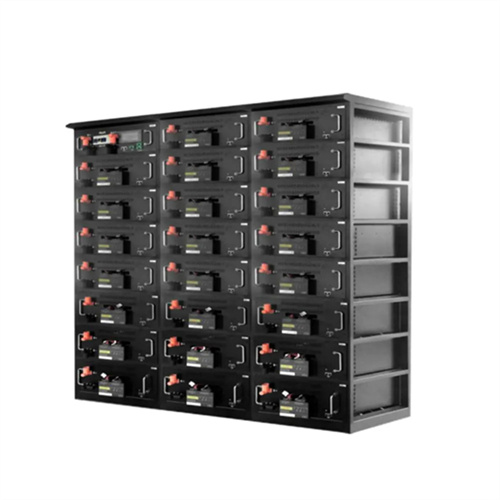
15 Sustainable Energy Solutions For Off Grid Living
3. Biomass Energy. Biomass energy involves the use of organic materials as a fuel source for heat and electricity generation. It is a renewable energy option that utilizes agricultural residues, wood, and other organic matter to produce energy. Off-grid living presents several opportunities for utilizing biomass energy, including wood stoves, biogas generators,

Wind Energy Resource Atlas of Armenia
This wind energy resource atlas identifies the wind characteristics and distribution of the wind resource in the country of Armenia. The detailed wind resource maps and other information contained in the atlas facilitate the identification of prospective areas for use of wind energy technologies for utility-scale power generation and off-grid wind energy applications.

Solar energy systems and solutions In Armenia
SolArm offers a variety of solutions in the field of solar energy (on-grid, off-grid, hybrd, microinverter systems, solar pumps, solar LED lights) Goals. The goal of the company is to develop the clean and renewable energy sector in Armenia,

Energy Overview of Armenia
General Information. The Republic of Armenia is slightly smaller in area than Maryland and has a population of about 3.9 million. Armenia is one of the trans-Caucasus republics formed from the breakup of the Soviet Union; it is bordered by Georgia to the north, Azerbaijan to the east, Turkey to the west, and Iran and Azerbaijan (Nakhichevan) to the south.

Off-Grid or Stand-Alone Renewable Energy Systems
Off-Grid or Stand-Alone Renewable Energy Systems; Off-Grid or Stand-Alone Renewable Energy Systems. For many people, powering their homes or small businesses using a small renewable energy system that is not connected to

Armenia
The Renewable Energy Project for Armenia aims to increase the production of privately owned and operated power generation using renewable energy in a sustainable manner. . Armenia - Renewable Energy Project : Armenia - Renewable Energy Project : environmental assessment

Solar energy systems and solutions In Armenia
SolArm offers a variety of solutions in the field of solar energy (on-grid, off-grid, hybrd, microinverter systems, solar pumps, solar LED lights) Goals. The goal of the company is to develop the clean and renewable energy sector in Armenia, to ensure energy security. PV solar panels types . The company offers poly-crystalline, mono

Solar Energy in Armenia | SOLARA
There is a great potential for solar energy in Armenia. Its effective use is beneficial both economically and in other spheres of social life and everyday life. Off-grid Inverter Solis S5-EO1P4K-48-P. Off-grid Inverter Solis S5-EO1P5K-48. Off-grid Inverter Solis S5-EO1P5K-48-P. 600W Portable Power Station.

The key to Africa''s off-grid energy breakthrough? A clear legal
It''s become widely recognized that a centralized grid alone cannot meet Africa''s energy access needs, especially in rural areas. Off-grid renewable energy solutions, on the other hand, are proving to be the most effective and least costly option. They are rapidly transforming rural communities, bringing sustainable and affordable electricity to areas that

Energy system transformation – Armenia energy
In 2021, several parallel efforts were under way to create a comprehensive policy framework for energy efficiency in Armenia.1 The government''s new National Programme on Energy Saving and Renewable Energy for 2021‑2030
6 FAQs about [Armenia offgrid energy]
Does Armenia have solar energy?
Armenia has significant solar energy potential: average annual solar energy flow per square metre of horizontal surface is 1 720 kWh (the European average is 1 000 kWh), and one-quarter of the country’s territory is endowed with solar energy resources of 1 850 kWh/m 2 per year. Solar thermal energy is therefore developing rapidly in Armenia.
How does Armenia produce electricity?
Armenia lacks fossil energy source, and heavily relies on the production of electricity from a nuclear power plant and hydro power plants, and uses imported fossil fuels to operate thermal power plants. Solar energy and wind energy productions are just a small portion of the overall electricity production.
Will Armenia keep promise to subsidize electricity prices?
Ministry Of Energy Infrastructures and Natural Resources Of The Republic Of Armenia. Retrieved 26 November 2016. ^ a b "Armenian Government Says it will Keep Promise to Subsidize Electricity Prices". Asbarez. 17 September 2015. Retrieved 26 November 2016. ^ Oliphant, Roland (25 June 2015). "Armenia's 'Electric Yerevan' protests enter seventh day".
Will Armenia cut back on use of natural gas for electricity?
The plant will reportedly allow Armenia to considerably cut back on use of natural gas for electricity production, because officials say it will also be twice as efficient as the plant's decommissioned unit and four other Soviet-era facilities of its kind functioning in the central Armenian town of Hrazdan.
How has Armenia restructured its energy sector?
Prompted by a severe electricity supply crisis in the mid-1990s, Armenia has revamped its energy sector over the past 20 years. Parts of the sector have been privatised, some companies have been restructured, most households now have access to gas, and cost-reflective tariffs have been introduced.
Does Armenia trade electricity with Georgia?
Armenia also trades electricity with Georgia, though volumes are low since the countries’ networks are not synchronised. Energy interconnections with Azerbaijan and Türkiye are currently inactive for political reasons. Prompted by a severe electricity supply crisis in the mid-1990s, Armenia has revamped its energy sector over the past 20 years.