
Building Technologies Office | Department of Energy
The Building Technologies Office (BTO) conducts research, development, and demonstration activities to accelerate the adoption of technologies and techniques that enable high-performing, affordable buildings that meet Americans'' need for resiliency and health while also supporting a reliable energy system.

Carbon-Neutral-Campus Building: Design Versus Retrofitting of
Two case studies were discussed: the Smart Energy Building (SEB) in the Savona Campus of the UNIGE, and the Paul L. Cejas School of Architecture (PCA) Building of the FIU. In the United States

Enabling energy-efficient buildings
ABB and the built environment. ABB is a partner to the buildings sector in its transformation journey, offering a wide-ranging portfolio of technologies to optimize building energy use and reduce emissions in offices, factories, hospitals, retail environments and homes.. From smart building solutions that integrate sensors and data analytics to energy-efficient electrification
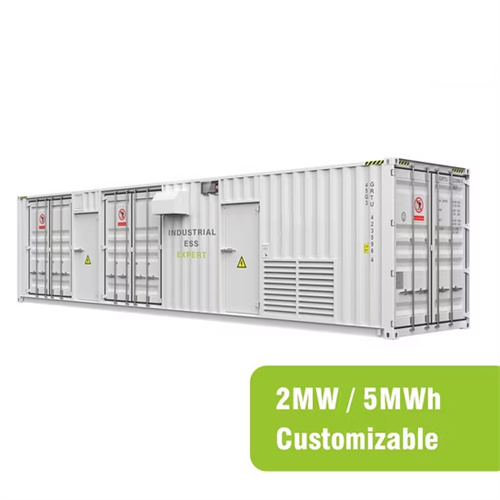
Honeywell Smart Power Solutions For Energy Resilience
Honeywell Smart Power is an integrated energy management platform that helps deliver comprehensive energy integration, control and optimization by dynamically adjusting power demand and supply based on grid availability. A resilient energy supply can help you reduce daily operating costs, support sustainability goals, and bring clarity to your energy management plans.

Buildings Innovation
The buildings sector contributed an estimated 35% of total U.S. greenhouse gas (GHG) emissions in 2021, including estimated portions of the industrial sector for embodied building life cycle emissions and the buildings-sector share of emissions

Ultra-Low Energy Buildings in U.S. On the Rise | Buildings
The American Council for an Energy-Efficient Economy (ACEEE) point out in a blog post that today''s buildings consume roughly 40% of all energy used in the United States. To create a future of sustainability, setting goals to meet the ULE standard of reducing commercial building energy intensity by 60-70% is the baseline.

Staff
Kerry Meade, Executive Director Kerry is the Executive Director of Building Potential (formerly the Northwest Energy Efficiency Council), a non-profit business association representing businesses that are working to decarbonize building energy use through energy efficiency, distributed resources, smart buildings, and other approaches. In this role, she is
Building Technologies Office | Department of Energy
The Building Technologies Office (BTO) conducts research, development, and demonstration activities to accelerate the adoption of technologies and techniques that enable high-performing, affordable buildings

A Federal Definition of Net Zero Emissions Buildings
"The new building''s estimated whole building energy use is at least 10% lower than required by the latest model code and the building is designed to achieve energy performance in the top 10% of similar buildings" For new buildings: modeled energy use at least 10% lower than permitted by the latest IECC or ASHRAE 90.1 model energy code AND
Federal Metering Guidance
Energy-intensive building s: For the purposes of this Metering Guidance, the term "energy-intensive buildings" includes industrial buildings, manufacturing buildings, data centers, laboratories, inpatient health care and hospitals, food service, and food sales. This list of building types is not exhaustive, so agencies should

Smart Building Technology Modules for Academic
Designing, requires collaboration among building owners, architects, engineers, building energy modelers, builders, utilities, facilities managers, and building operators. However, workforce development and training for smart building technologies are lacking at both the college and professional levels—these technologies evolve very quickly

Community-Based Teams Selected by DOE''s Building America
With a significant background in building retrofits, this team brings a wealth of technical knowledge and experience mixed with a desire to help residents of low- and moderate-income housing in the northeastern United States overcome financial, regulatory, and other barriers to realize the benefits of living in fully electrified, energy

Smart Electrical Panel-Based Home Energy Management
• foresee and smart panels are complementary solutions for energy management. Integrating foresee with smart panels would greatly improve user experience and provide better value. • Span has deployed thousands of smart panels across the United States since 2018. Built upon our past collaborations, Span has

Grid-Interactive Efficient Buildings
The GEB Initiative works to remake buildings into clean and flexible energy resources by combining energy efficiency and demand flexibility with smart technologies and communications to inexpensively deliver greater affordability, comfort, productivity, and performance to America''s homes and buildings.

Home
Accelerating the adoption and commercialization of smart buildings technologies and practices through education and demonstration. TOOL LIBRARY Building operators and engineers can borrow diagnostic tools. INNOVATION CENTER Our space, in Seattle''s Pacific Tower, is available for meetings, events, and trainings. EDUCATION &

Grid-Interactive Efficient Buildings for Federal Agencies
As referenced in the Energy Act of 2020, FEMP supports the Federal Smart Buildings Accelerator (FSBA) to design and implement specific approaches that would accelerate the adoption of smart building and grid responsive technologies. This effort is building upon GEB research conducted in the U.S. Department of Energy Building Technologies Office (BTO) and the General Services
GSA Oklahoma City Federal Building: Smart Buildings Case
These smart buildings provide an opportunity to reduce electricity consumption in the building sector. The purpose of this smart buildings case study is to showcase a leading example of a GEB renovation project in the federal buildings space and provide key information on the project roles, processes, costs, and benefits.

IoT—A Promising Solution to Energy Management in Smart Buildings
The use of Internet of Things (IoT) technology is crucial for improving energy efficiency in smart buildings, which could minimize global energy consumption and greenhouse gas emissions. IoT applications use numerous sensors to integrate diverse building systems, facilitating intelligent operations, real-time monitoring, and data-informed decision-making.

Top 10 Smart Buildings | Energy Magazine
From buildings using 100% natural energy sourcing to underground thermal chambers, we take a look at the Top 10 smartest buildings across the world. Duke Energy Center - Charlotte, United States. It uses a variety of smart building technologies, including digital twins that help understand the use of space and modeling - for instance

BRIEF Water-Smart Buildings
Water-Smart Buildings: The Potential of Thermal Energy Networks to Cool Buildings Conserve Water 3. We reviewed self-reported data from ten thermal energy systems across the United States and Canada, assessing their potential to save water in commercial and institutional buildings. The initial results are promising. When replacing

GSA Oklahoma City Federal Building: Smart Buildings Case Study
This case study report describes a grid-interactive efficient building (GEB) renovation project at the General Services Administration''s (GSA''s) Oklahoma City (OKC) Federal Building, and demonstrates that GEB-ready strategies and technologies can be deployed across buildings with minimal investment.

Grid-Interactive Efficient Buildings
Buildings Energy Use: 40% of U.S. total Buildings Electricity Consumption: 75% of U.S. total Buildings Peak Electricity Demand: ~80% of regional total U.S. Building Energy Bill: US$380 billion per year Energy Use Building Electricity Use Energy use in the U.S. building sector Source: EIA 2017 Annual Energy Outlook

Grid-interactive Efficient Buildings Technical Report Series
Neither the United States Government, nor any agency thereof, nor any of their employees, nor any of their contractors, subcontractors, or their employees, makes any warranty, express or implied, or assumes any legal An energy-efficient building that uses smart technologies and on-site DERs to provide demand flexibility while co-optimizing

Zero Energy Districts & Communities: Challenges & Solutions
Challenge: Many technologies and strategies must be proven out and integrated to achieve zero energy. Although there are many potential technologies and strategies that can help a district reach its goals, some emerging approaches need to be proven out, and all technologies and strategies must be integrated into an overall design that balances costs, benefits, and

United Arab Emirates leads GCC smart building initiatives
Its member states are Bahrain, Kuwait, Oman, Qatar, Saudi Arabia, and the United Arab Emirates. [UAE and Saudi Arabia taking smart seriously] The UAE currently leads with more than two-thirds of the 1,236 Leadership in Energy & Environmental Design (Leed)-certified projects, and has a smart building score of 48 out of 100.

Building Energy Codes Program
Provides a variety of educational and training resources and assists states working to measure and improve code compliance; Administers a Help Desk to assist individual code users with questions about energy codes; Building
Federal Smart Buildings Accelerator Boosts
The Federal Smart Buildings Accelerator successfully promoted smart buildings and grid-interactive technologies across federal agencies, revealing high interest but challenges with funding and implementation.

Building & Construction | Panasonic North America
Across the industry, construction professionals and homeowners are increasingly aware of the environmental impact that buildings have on our planet and communities. So we''ve pioneered innovative building technologies to make better use of resources, reduce environmental impact and maximize occupant health and productivity.

Logical Buildings
Logical Buildings is a smart building software and solutions company that reduces energy and operating costs, achieves sustainability goals and improves tenant comfort for multifamily and commercial properties. Logical Building''s software platform, SmartKit AI™, creates and applies property-specific data to influence the behavior of property

Smart Building Start (SBS) | Department of Energy
An official website of the United States government. Here''s how you know. Here''s how you know. Smart Building Start (SBS) A presentation from the 2021 Building Technologies Office Peer Review. Buildings. Smart Building Start (756.71 KB) Building the energy economy. Reducing environmental risks. Expanding the frontiers of knowledge with

Building Energy Codes Program
Provides a variety of educational and training resources and assists states working to measure and improve code compliance; Administers a Help Desk to assist individual code users with questions about energy codes; Building Energy Codes High-Level Overview. Building Energy Codes 101: What Are They and What is DOE''s Role?

Grid-Interactive Efficient Buildings Support Federal Facility
The Federal Energy Management Program (FEMP) plays a key role in helping agencies understand and meet energy-related goals, including those surrounding smart buildings technologies and grid-interactive efficient buildings (GEBs), which can support decarbonization.

Green Building | US EPA
The following tools and resources may support communities with green building goals. Smart Growth and Preservation of Existing and Historic Buildings: Learn how the preservation and reuse of existing and historic buildings can support sustainable communities.; Smart Location Mapping: Access data products and mapping tools to analyze the built

Carbon-Neutral-Campus Building: Design Versus
Two case studies were discussed: the Smart Energy Building (SEB) in the Savona Campus of the UNIGE, and the Paul L. Cejas School of Architecture (PCA) Building of the FIU. In the United States

Best Practices for Resilience in Smart Grid
With proper design and planning, GEB''s responsive capabilities have the potential to enable building and facility resilience—coordinating with microgrids, maintaining power on critical circuits to sustain essential operations, and monitoring building health and safety status during an outage.

Carbon-Neutral-Campus Building: Design Versus Retrofitting
2.1. Zero-Energy Buildings Legislation in the European Union and United States European legislation on the energy performance of buildings—the European Union (EU) Energy Performance of Buildings Directive (EPBD) [21]—set "nearly-zero-energy buildings" as a standard for new buildings by the end of 2020, whereas the United States (US) is
The First Smart Neighborhood of Its Kind in the Southeast
In suburban Birmingham, Alabama, Alabama Power''s Smart Neighborhood is nearly complete, bringing together 62 high-performance, connected homes and a community microgrid. The Building Technologies Office (BTO) has been working with Alabama Power, their parent company Southern Company, Oak Ridge National Laboratory (ORNL), and DOE''s