
Vatican City solar setup
Pope Francis has now asked Vatican authorities to begin constructing a solar plant. Pope Francis announces his plans to transition the Vatican to 100% solar power to support climate change efforts.. Pope Francis has now asked Vatican authorities to begin constructing a solar plant. Pope Francis announces his plans to transition the Vatican to 100% solar power to support climate change efforts.. Pope Francis has unveiled a plan to transition Vatican City to solar energy as its primary source of electricity in his latest motu proprio “Fratello Sole” or “Brother Sun.” [pdf]
FAQS about Vatican City solar setup
How will a solar plant benefit the Vatican?
The Pope has given full authority to two special Commissioners to supervise the plant’s construction, ensuring that the project is carried out efficiently and effectively. The energy generated by this solar plant will cover all the Vatican’s energy needs, eliminating dependence on non-renewable energy sources.
Does the Vatican need a solar plant?
The implementation of a solar plant not only improves the Vatican’s environmental sustainability, but also offers economic and social benefits. By generating its own energy, the Vatican can save on light. This is especially relevant in a context where the price of light is a constant worry for many.
Why did Pope Francis build a solar plant in Rome?
Pope Francis’ decision to construct a solar plant on the outskirts of Rome is a tangible manifestation of his commitment to sustainability and the fight against climate change. Not only will this initiative provide renewable energy to the Vatican, but it will also establish a standard for other institutions around the world.
Where is Vatican Radio's New solar power plant located?
The plant will be located in Santa Maria di Galeria, some 11 kilometers from Rome, where Vatican Radio’s broadcasting station is located. Not only will this project generate renewable electricity, but it will also be integrated with the land’s agricultural needs, combining modern technology with sustainable practices.
Can the Vatican save on light?
By generating its own energy, the Vatican can save on light. This is especially relevant in a context where the price of light is a constant worry for many. The use of solar energy also improves the State’s energy efficiency, enabling a more responsible and sustainable light consumption.

Energia solar Vatican City
Pope Francis has now asked Vatican authorities to begin constructing a solar plant. Pope Francis announces his plans to transition the Vatican to 100% solar power to support climate change efforts.. Pope Francis has now asked Vatican authorities to begin constructing a solar plant. Pope Francis announces his plans to transition the Vatican to 100% solar power to support climate change efforts.. Pope Francis announced his plans to transition Vatican City into 100 percent solar power amid the increasing risk of climate change.. Pope Francis has unveiled a plan to transition Vatican City to solar energy as its primary source of electricity in his latest motu proprio “Fratello Sole” or “Brother Sun.” [pdf]
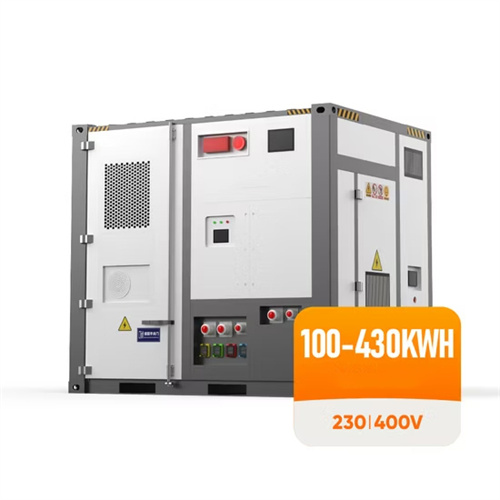
Faroe Islands save electrical energy at home
Energy in the Faroe Islands is produced primarily from imported fossil fuels, with further contributions from hydro and wind power. Oil products are the main energy source, mainly consumed by fishing vessels and sea transport. Electricity is produced by , and , mainly by , which is owned by all the municipalities of the Faroe Islands. The are not connected by power lines with continental Europe, and thus the archipelago can. [pdf]
FAQS about Faroe Islands save electrical energy at home
How much electricity is renewable in the Faroe Islands?
In the Faroe Islands, more than 80% of the power for the main grid was renewable on 50 days in 2022. The municipality-owned company SEV is the main electricity supplier, providing approximately 90% of the total production, with private producers contributing the remaining percentage.
How is energy produced in the Faroe Islands?
In the Faroe Islands, energy is produced primarily from hydro and wind power, with oil products being the main energy source. Mostly consumed by fishing vessels and sea transport.
Should the Faroe Islands be self-sufficient?
Isolated in the North Atlantic Ocean, the Faroe Islands need to be self sufficient in terms of electricity generation as the Faroese electrical grid is not interconnected to neighbouring countries. SEV operates six hydro power plants, three thermal power plants, three wind farms and one solar power plant.
Why is Sev the main power supplier in the Faroe Islands?
SEV is the main power supplier in the Faroe Islands. We operate on 17 of the 18 islands that constitute the Faroe Islands. Isolated in the North Atlantic Ocean, the Faroe Islands need to be self sufficient in terms of electricity generation as the Faroese electrical grid is not interconnected to neighbouring countries.
Can the Faroe Islands import or export electricity?
The Faroe Islands cannot import or export electricity since they are not connected by power lines with continental Europe. Per capita annual consumption of primary energy in the Faroe Islands was 67 MWh in 2011, almost 60% above the comparable consumption in continental Denmark.
Are the Faroe Islands a sustainable country?
Did you know that the Faroe Islands is one of the world’s leading nations in producing sustainable electricity with over 50% of the nation’s electricity deriving from renewable energy sources? There is no shortage of renewable power in the Faroe Islands, due to the ocean currents and tides of the Northeast Atlantic and an abundance of strong wind.
Contact Us
We are deeply committed to excellence in all our endeavors.
Since we maintain control over our products, our customers can be assured of nothing but the best quality at all times.